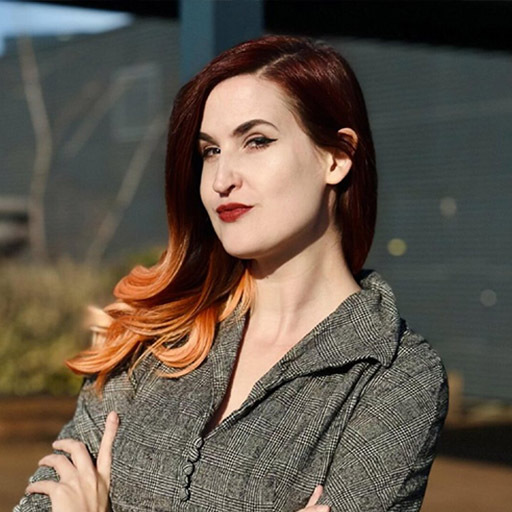
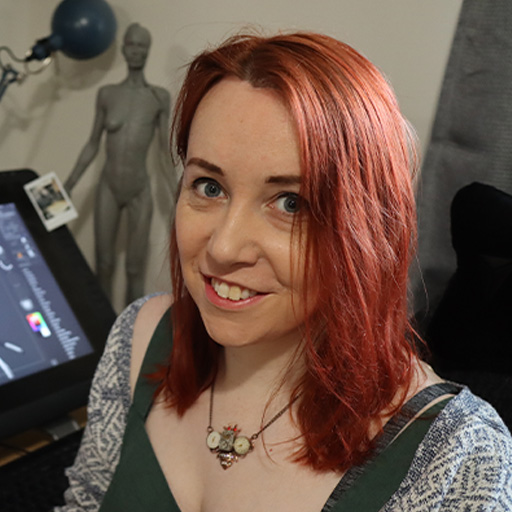
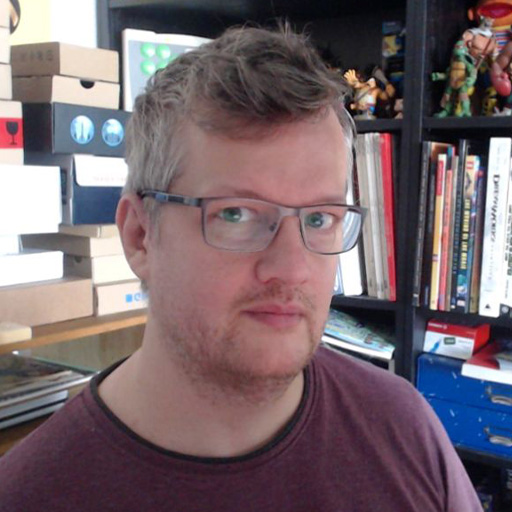
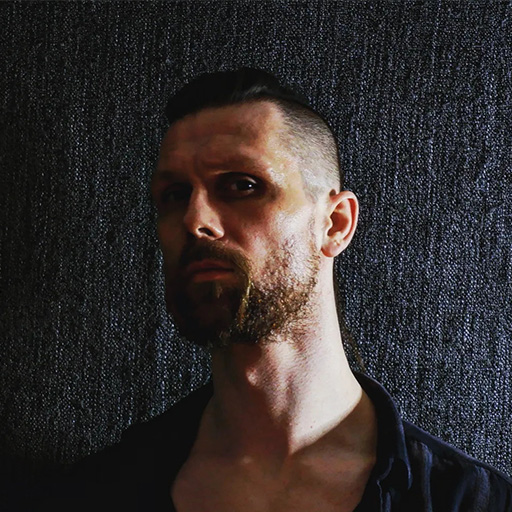
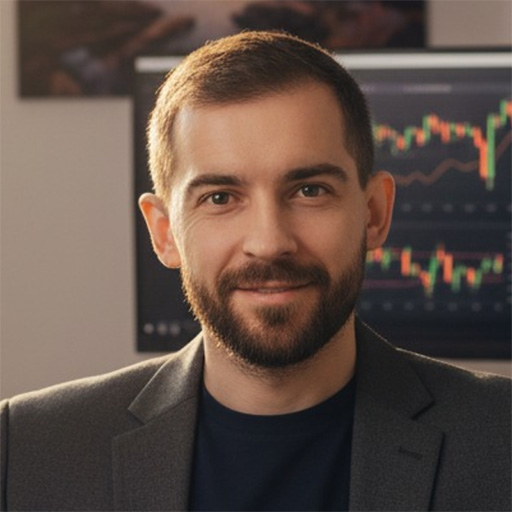
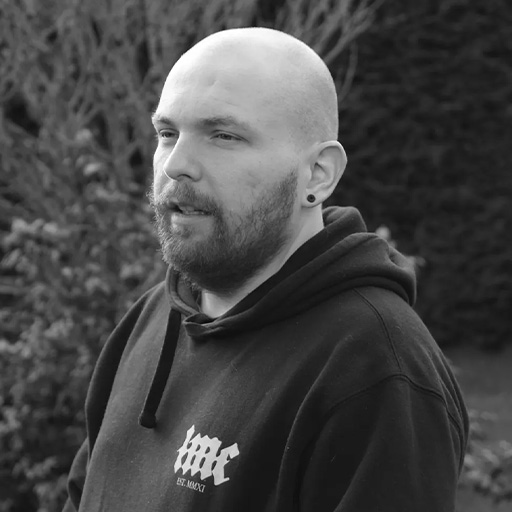
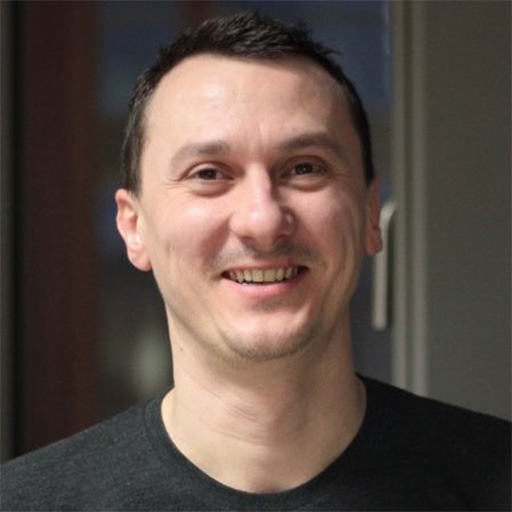
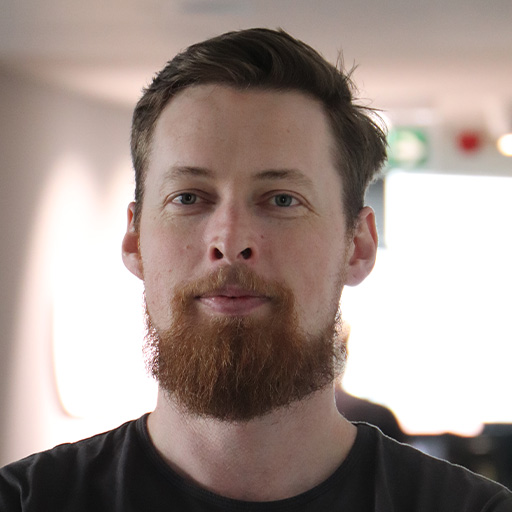
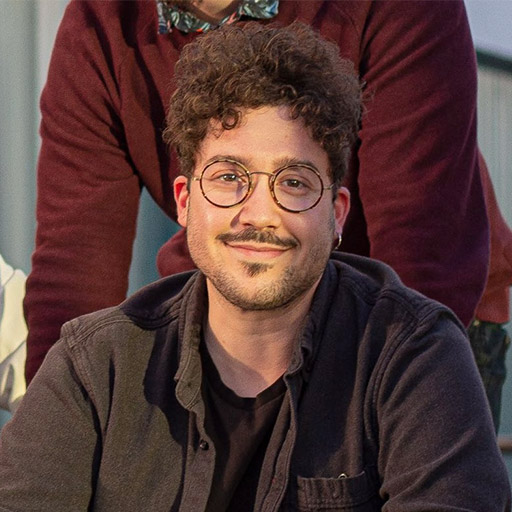
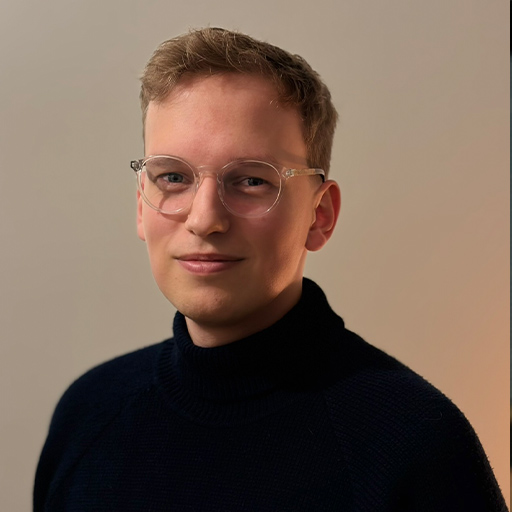
Anna Pačesová is the Lead Character Artist at Warhorse Studios. She started in QA 12 years ago before moving to the 3D environment team, where she spent six years creating assets and landscapes for KCD I and II. She later joined the character art team and was soon offered the opportunity to lead it.
Creating characters for Kingdom Come: Deliverance II meant finding the balance between historical authenticity, artistic expression, and technical limitations.
This talk offers a glimpse into how character artists bring the medieval world to life from refining the faces, crafting diverse outfits to tackling the challenges of the game’s intricate clothing system with so many, many layers... and yes, there will also be some animals.


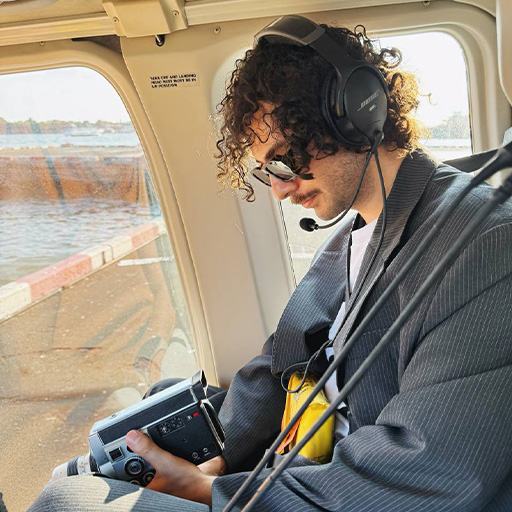
George Varodi is a director, artist and filmmaker working across animation and games. His work explores the connection between cinematic storytelling and visual world-building, with experience spanning animated films, games and entertainment projects.
The talk focuses on the relationship between design and storytelling. Through examples from animation, games and his own original projects, George Varodi will share his approach to building characters, environments and narratives through visual language.
We will explore how a single visual idea can become the foundation of an entire cinematic world. He will show how composition, movement, atmosphere and visual rhythm can communicate emotions before a single word is spoken.
From concept development to final cinematic moments, we will break down the directorial choices behind creating stories that feel alive and memorable.


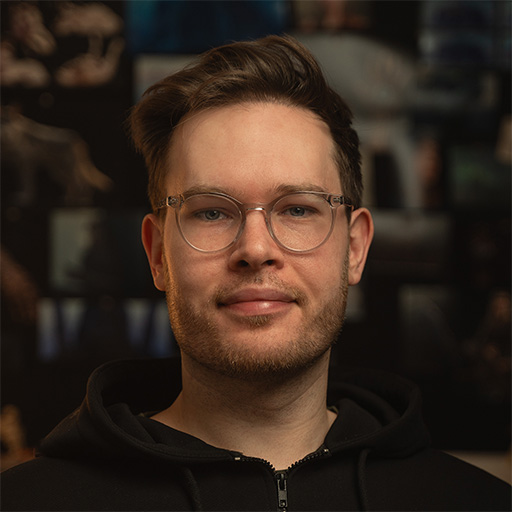
Wojtek Fus is a Polish concept artist and director who has worked across AAA games and film since 2011. His concept and key art credits include The Witcher 3: Wild Hunt, Horizon Zero Dawn, Detroit: Become Human, the Netflix series The Witcher, Love, Death & Robots, and Bloodshot, along with recent game art for Manor Lords and The Blood of Dawnwalker. His clients have ranged from Netflix and Disney to Blur and CD Projekt Red.
Beyond his studio work, he co-founded Level Up, a free online learning platform for artists, and Photobash.org, a photo-reference library for the industry. He is now directing his own independent animated film, Solace, and sharing the process publicly as the project comes together.
In this talk, I’ll share how Solace grew from a deeply personal experience into an independent animated project, and the lessons I’ve learned along the way.
We’ll explore how curiosity, limitations, collaboration and failure can help you find your own creative voice and build a personal project sustainably.


Dan has over 20 years of experience in the creative technology sector, helping ambitious and innovative companies in emerging technologies such games and immersive tech, to access funding, partners, and support they need to scale up and enter new markets.
His mission is to connect companies that have ambition, investment potential and growth capacity to opportunities and networks around the world. He has sourced commercial and technology partners for hundreds of development firms, as well as global brands such as Ericsson, HSBC, Microsoft, Sony, and Nokia. He has also worked with regional inward investment clients in the UK, France, Canada, Ireland, Singapore, and Malta. Based in the UK, but originally from Seattle, he leverages his extensive knowledge and network of the European and North American markets to help companies expand internationally.
A panel of international games businesses sharing their experiences and tips to how to reach out and grow globally.


Christopher Hamilton is Partnerships Manager at Aiba, a Norwegian technology company focused on player safety, and was recently re-elected to the Board of Directors of the International Game Developers Association (IGDA).
A games industry professional since 2007, Christopher has extensive experience in production, business development, and developer and publisher relations. He has worked across PC, mobile, web, and emerging platforms with companies including Rovio, Genvid Technologies, GameHouse, Nevosoft, and Playcademy (MadData).
Based in Helsinki, Christopher is passionate about mentoring, community building, and helping game makers find their voice. In addition to his work on the IGDA Board, he serves as the IGDA’s European Chapter Coordinator and holds leadership roles with IGDA Finland, We <3 Games, and Finnish Game Jam. He advises game studios and game-adjacent startups, regularly speaks and mentors at industry events, serves as a game award judge, and is one of the lead organizers of Leadership Day by IGDA Finland and Finnish Games Week.
This introductory session explores how game developers can create safer and more positive player experiences through thoughtful design. Rather than treating toxicity, harassment, and unhealthy player behavior as problems to solve after launch, attendees will learn how Safety by Design and Prosocial Design principles can be incorporated from the earliest stages of development.
Using examples from multiplayer games, the talk examines how game mechanics, social systems, incentives, and user experience decisions influence player behavior.
Participants will learn:
No prior knowledge of Trust & Safety, moderation, psychology, or behavioral design is required. This session is designed for beginners and will provide a foundation for designers, producers, community managers, and anyone interested in building better online experiences for players.

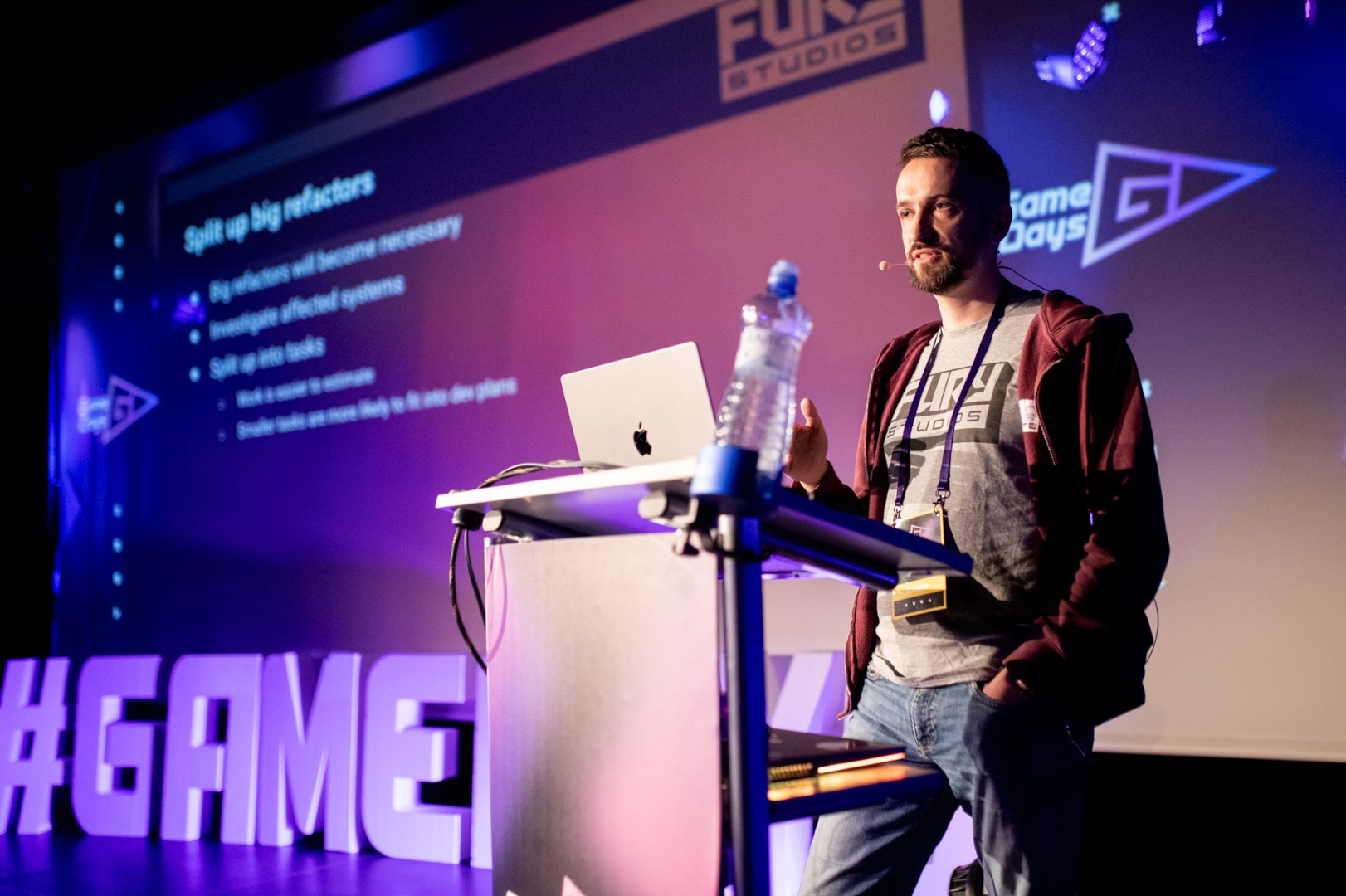


Mike is a concept artist with a passion for drawing and painting. He has also worked extensively in illustration over the years and has taught many people the fundamentals of drawing and painting.
In this talk, I want to share some thoughts about the typical situations that come up when you're drawing that make you feel like you don't want to finish the piece - the things that make you feel stuck, lose focus, and get distracted.
I'll explain how these are often just misconceptions about the creative process, because I believe drawing can only truly be done well when we're actually enjoying it.
And, of course, I'll also be sharing plenty of drawing and painting tips and tricks along the way.


Artist from Poland with over a decade of experience in the art industry. She has contributed to internationally acclaimed projects such as Magic: The Gathering, Loving Vincent, The Wagadu Chronicles, and Stranger Comics - working as an illustrator, painter, concept artist and art director.
While her professional background includes mainly polished digital fantasy art for games, animation and publishing, her heart is strongly drawn towards traditional media, creating art inspired by a present moment.
I will demonstrate how to quickly capture a subject with technique of watercolor and gouache.


Ulysse Verhasselt is a freelance Concept Artist. He is passionate about stylisation and environments, and through both his professional and teaching career, he has focused on analyzing and deepening his understanding of these subjects.
With more than a decade of experience, he has had the chance to contribute to many stylized environments, notably Valorant, where he has worked on many of its maps.
Projects are often categories by their styles, ranging from super stylized to extreme realism. It often feels like they would be separated and far apart, with little in common.
In this talk I will show what differentiate styles and what brings them together, to better understand our own art and appreciate better the ones of others.


Originally a filmmaker and video artist, he found his calling in the video game industry, where he has been creating cutscenes for the past 10 years. After working on Mafia 3 and Kingdom Come: Deliverance, he rose from cinematic designer to cinematic director, creating cutscenes for Kingdom Come: Deliverance 2, leading a team of 12 talented filmmakers and creating one of the biggest cinematic spectacles in the genre.
How did we create cinematics for Kingdom Come: Deliverance 2?
What was the artistic, production and technological process? How did we make linear cinematics work in an open world game and what makes them fun to watch?
From screenplay to final touches, this presentation explores the adventurous creative process behind the cinematics of Kingdom Come: Deliverance 2.


Daniel is a Solo Dev & Game Designer bridging technical skills with Marketing.
How leveraging in game creative mechanics can provide unlimited possibilities for marketing content, and how combining technical and creative skills of a marketer can provide a powerful "Sandbox Marketing" tool.


Alexander Dudar is a Ukrainian Senior Concept Artist based in Warsaw, with over 15 years of experience in games, film, and television. He has worked with CD PROJEKT RED, Lucasfilm, Industrial Light & Magic, and Skydance.
His portfolio includes Cyberpunk 2077, alongside recent projects such as The Batman Part II, Neuromancer, and Andor Season 2. His work focuses on environment design, cinematic keyframes, and visual development, helping directors and production teams translate ideas into believable worlds.
A personal look at visual storytelling and problem-solving in concept art for games and film, based on 15 years of industry experience.
Through examples from his work, Alexander explores where the two industries overlap, how their demands differ, and what working in both has taught him.


Oscar is a pioneer in mobile and connected games working with LiveOps experiences since 1998 on PC, mobile, and console.
He was the original evangelist for Unity Ads and literally wrote the book on 'Games as a Service' in 2014. 'Playing With Balance', his latest book explores game economy design and was released in 2026.
Oscar is Chief Strategy Officer for Arcanix.ai, which ties your releases to your player data, clearly showing cause and effect so you can confidently decide what to do next.
How do you know if your game has commercial potential? In this talk Oscar Clark, games industry veteran and author of Games As A Service and Playing With Balance, will share a different strategic way to look at your Direction, Design and Data to give you the best chance for commercial success.
He will propose an evidence-based approach to development methodology that can transform any development studio, reducing risk, avoiding making mistakes and ensuring you create games which players will love.


Illustrator and concept artist working in the games industry since 2003. Cooperated on projects for companies like SIXMOREVODKA, Wizards of the Coast, Riot Games, Blizzard Entertainment, Ubisoft and many others.
Currently works for CD PROJEKT RED as an expert illustrator, while painting and drawing traditionally in his free time.
In an ever changing world of uncertainty and new challenges, I started to think about the reasons why I do what I do. I began looking for new meanings in creativity beyond simply serving clients and earning money.
This talk is about some of the meanings I found.


Denis is a Character Artist with over 15 years of experience in the games industry, including several years in Senior, Lead and Principal roles. Throughout his career, he has worked across mobile, AA and AAA productions, on both stylized and realistic games, with experience ranging from hands on character creation to leading teams, developing pipelines and setting quality standards.
He has worked in different production environments, including in house development, co development, outsourcing and freelance. He is also a Character Art mentor at Think Tank Training Centre, helping artists develop their skills and prepare for the industry.


Amy has been working in illustration and animation for over 20 years, working in a wide range of styles across advertising, television, and video games. Drawing on her training as a traditional media illustrator and many years working as a generalist before specialising in character modelling, she has worked for companies such as Goodbye Kansas and Axis Studios, where she was Head of Characters and worked on projects such as Love Death and Robots, Riot’s Tales of Runeterra and a number of cinematic game trailers.
For the last year and a half, she has been working as a character concept sculptor for Netflix Studios on a major new animated series, as well as holding a consulting role as a Character Art Director at Zaratan Studios.
Earlier this year, she moved into AAA video game development as an Expert Character Artist at CD PROJEKT RED.
I'll be talking about my career to date, before presenting my approach to creating characters for animation and games and the essential skills that a character artist needs to have to be successful.


Tereza is a marketing professional with over 10 years of experience in the gaming industry, specializing in influencer marketing across Europe. She has led campaigns for major game titles, managing monthly budgets of around $100,000 and collaborating with creators on YouTube and Twitch.
Her work spans both AAA and zero-budget campaigns, with a focus on strategy, outreach, and building effective creator partnerships regardless of budget size.
A practical overview of influencer marketing for game developers, combining experience from AAA and zero budget campaigns.
The talk covers:


Aurélien Fournier is a concept artist and educator based in Paris. He is the founder of ConceptCore, where senior artists from the games and film industries teach masterclasses, workshops and long term mentorships. Previously, he was Head of Concept Art at New3dge. In September 2026, he opened ConceptCore Academy, an in person concept art school in Paris focused on fundamentals, design and 3D.
After years of teaching and mentoring concept art students, I keep seeing the same pattern, some profiles always break into the industry, while others never do.
In this talk, I will break down the traits and habits I see in the best students in the world, the ones that separate working artists from eternal students. I will then look at where the industry is going with AI, what gets automated, what stays valuable, and how to build a profile that makes it in that future.


Vlad Micu is a free agent and business development professional in the game industry with a strong reputation for creating long-term relationships and generating new sources of revenue that lead to significant returns for his clients.
Currently he serves as a non-native representative for the Polish game development community, supporting their game developers association Indie Games Polska (https://igp.org.pl/), their GIC.gd conference in Poznan, Poland on Oct 24-27 (www.gic.gd), and several of their government initiatives.
He is an experienced evangelist with a strong network who is equally able to take the lead as well as be part of a team and has an established track record of being able to easily adapt to new challenges and environments in order to deliver success. Vlad is credited in over 30 videogame products on mobile, VR, console and PC.
With his own company VGVisionary, Vlad travels the world to speak at events, meet with game developers and offer advice, introductions and support to those proactively seeking help.
Public outrage can transform a game development decision, cultural mistake, casting choice, delay, or ill-considered comment into a reputational crisis within hours. Drawing on Jon Ronson's So You've Been Publicly Shamed (2015) and inspired by my colleague Kate Edwards’ work as a culturalization strategist, this session examines how online criticism escalates into disproportionate punishment,and what developers can actually do about it.
Deconstructing recent game-industry controversies, the presentation distinguishes legitimate product and cultural criticism from ideological opposition, misinformation, public shaming, and outrage generated by spectators who may never have intended to play the game.
What will you learn:
• How to identify who is angry
• How to understand what they actually want
• How to determine whether engagement will resolve or amplify a controversy
The session introduces a practical S.H.A.M.E. response framework for preparing teams, protecting individual developers, acknowledging legitimate criticism, mobilizing credible community voices, correcting misinformation, and recognizing when it is time to stop feeding the outrage cycle.


Anjin is a Berlin-based director, designer and artist with 25 years of experience working in the creative industries.
His work can be found in games, animation, advertising, comics, kid‘s media and toys.
How do stylized character designs make a splash in the 4k gaming era?
From AAA to indie: When modern game engines allow for previously unseen levels of photo realism, why and how do designers and artists push for style?


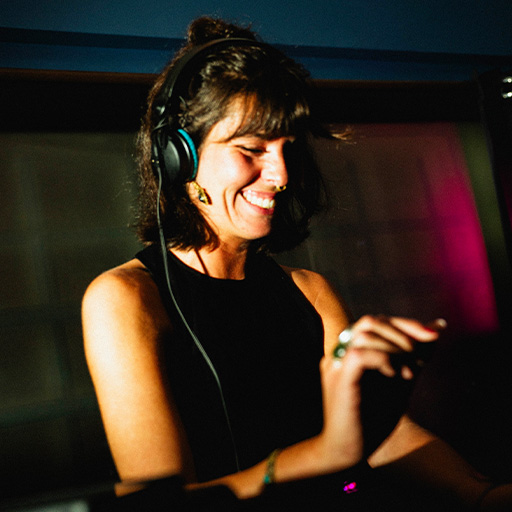
SAVONNETTE is a DJ known for her infectious energy and narrative, structured sets blending Italo, Afro House, and powerful Techno.
Her performances are built as a progressive journey: from disco grooves and sun-soaked textures that bring people together, to a dark, intense, raw climax.
The goal: to create a true dancefloor trajectory, moving between warmth, tension, and total release.


Leszek’s game development adventure began in high school, making point and click adventure games and mods for Neverwinter Nights and Morrowind. At university, he studied OpenGL and spent far too long building a hack and slash game. Around that time, he also worked as a professional Dungeon Master.
He entered the industry in 2008, contributing to mobile versions of titles such as Castlevania, Metal Gear, Worms, and Sonic. In 2012, he joined Guerrilla Games at PlayStation, helped ship Killzone Shadow Fall, and later helped build the Horizon franchise.
In 2024, he co founded Chaos Manufacturing to develop AA games and later established Leshy Interactive, a consultancy advising studios on design, engineering decisions, game direction, and production.
Your action game can have a great art, a compelling story, and innovative mechanics, and still feel terrible to play. The culprit is almost always the same: the 3Cs.
The 3Cs: Character, Camera, and Controls, are the invisible foundation of great action games. When done right, players forget they exist. When done wrong, they ruin the experience.
Drawing on nearly two decades of game development experience, this talk breaks down why action games may struggle with basic feel, and offers a practical framework for fixing it.


Matt Cęckiewicz is a Polish-German Creative Director, Art Director, and Miniature Artist working across digital Games, physical Collectibles and Architecture. He has worked as an Art Director at Robot Gentleman, Acting Art Director at Gamecan, and 3D Artist / Master Painter at CD PROJEKT RED, contributing to projects including GWENT, Cyberpunk 2077, Contenders: Arena, and 60 Seconds! Souper Scavenger.
Through his studio überliner inc., Matt connects game development with physical craftsmanship, creating collectibles, teaching painting workshops, and helping studios build stronger visual identities. His talks focus on art direction, creative leadership, team culture, and the human side of making games.
My talk explores how Feedback, Trust, Ownership, Empathy and production Systems shape Creative Teams in game development. Based on my real Art Direction and Team Leadership experience, I look at why talented Artists become disengaged, how unclear Feedback creates revision loops, and why Ownership only works when people have real influence.
The talk offers practical ideas for Artists, Leads, Producers, Programmers and Founders who want to improve collaboration, reduce friction and build healthier Teams all while maintaining a high quality of Art.


Gabriel Nagypal is a Senior Environment Concept Artist based in Slovakia. He has been working on games and movies for more than 8 years and has worked on titles such as World of Warcraft: The War Within, Diablo Immortal, V Rising, Wonder Woman, Project LAX, and many more titles that have not yet been announced.
He specializes in designing immersive environments that range from intricate props and magical interiors to massive cinematic vistas. Over the years, he has collaborated with studios such as Karakter Design Studio, Criterion Games, EA, Envar Studio, West Studio, Moon Pillar Studio, and many more.
We will discuss our approach to worldbuilding, from developing stories and believable characters to building imaginary worlds from the ground up. We’ll share our experiences and tips on what to do between jobs when work isn’t coming in, how to tailor your portfolio to specific clients, and how to identify personal weaknesses and develop a well-rounded skill set.


Pavol Kušmírek is a developer at Greentube, where he has worked for over 4 years, starting during his second year at the Technical University of Košice. He works on games of chance, math, and SDK development using C#.
What began as a student job turned into a full career. He graduated while already gaining hands on experience on a live team, and has been building on that foundation ever since. Games have always been his passion.
Learning to code in class is one thing. Working as a junior developer on a real team is another. In this session, I'll share what surprised me most when I started my first job as a junior dev, the stuff nobody teaches you in school.
You’ll learn:
If you're a junior developer trying to figure out how to survive and grow on a real team, this session is for you.


Martin enjoys building things around games, and his goal is simple: to help great games have a better chance to succeed. Sometimes they succeed, sometimes they learn and try again. :)
He co-founded 4Boars, where they focus on trailers and marketing for games. Over time, they expanded into player testing and validation with Playlytix, and publishing with 2Frogs.
We’ll talk about what developers should do before committing serious time and money to a game idea. From market research and validating the concept, to early player testing, positioning, marketing, budgeting, and publisher readiness.
Using our experience from 4Boars, Playlytix, The Amfibianz, and 2Frogs, we’ll show how small decisions early in development can significantly increase a game’s chances of success and help avoid expensive mistakes later.


Labros has been a character and creature concept artist for the past few years, having worked on projects like World of Warcraft, Hearthstone, and Supervive.
He is now also a mentor at New3dge in Paris, where he teaches a skin design class. His true passion lies in painting stylized fantasy creatures like goblins and dragons.
I will talk about how to take a classic fantasy archetype like that of a goblin and stylize it the right way to make it your own.


Filip is a finance professional based in Vienna with a decade of experience encompassing Big 4 consulting and CEE banking. He now applies that background to the game industry.
He is the founder of The Amfibianz, a consultancy providing investment readiness, fundraising support, and fractional CFO services to indie game studios, and co-founder of Playlytix, a managed gameplay testing marketplace. He is also building a CEE-focused game publisher 2Frogs with co-founder Martin Hatas from 4Boars.
We’ll talk about what developers should do before committing serious time and money to a game idea. From market research and validating the concept, to early player testing, positioning, marketing, budgeting, and publisher readiness.
Using our experience from 4Boars, Playlytix, The Amfibianz, and 2Frogs, we’ll show how small decisions early in development can significantly increase a game’s chances of success and help avoid expensive mistakes later.


Freelance Concept Artist working in the video game industry for 7 seven years specialized in environment design.
We will discuss our approach to worldbuilding, from developing stories and believable characters to building imaginary worlds from the ground up. We’ll share our experiences and tips on what to do between jobs when work isn’t coming in, how to tailor your portfolio to specific clients, and how to identify personal weaknesses and develop a well-rounded skill set.


Wojtek has been a part of the gaming industry since 2001. He has spent the last 15 years working in various business, marketing, PR, and leadership roles.
His greatest goal is to create a healthy ecosystem where small studios and indie developers can achieve commercial success leading to financial stability without sacrificing their creative integrity.
Coming from the AAA world, transitioning into indie publishing, and being a solo game developer himself, as well as working with small studios of 3 to 5 people, has given him the experience and insight to truly grasp the essence of modern indie game development and business.
Steam is evolving, sunsetting some functionalities, expanding others, and introducing new ones. What was the Steam publishing meta for AA to solo-dev games in 2025 is no longer valid in 2026.
Let's take a look at the best (and worst) Steam publishing practices and make sure your game goes with the flow, not against the tide.


Pavol grew up playing 8-bit games in arcades and on fake game consoles, played games for living at Sector.sk, mingled with developers, co-founded SGDA, organized international conferences (Reboot Develop, BGD, Fest Anca Game Days, Splitscreen) & local meet-ups, while helping developers to tell their stories, build interest in their projects, creating a platform where they could shine and connecting them with the right partner.
He worked with start-ups, small indie outfits and large development groups utilizing his vast network built over the past 20+ years.
Split between two countries, born in Slovakia, lives in Croatia. Currently at IndieBI, where he is helping sell more games. At Game Days he is organizing painting mini figures.


Michal Kolejak is Head of Studio and Executive Producer at GRIP Studios, combining game production, UX expertise, and multidisciplinary team leadership.
Before joining GRIP, he built and led the UX department at Pixel Federation. He has contributed to multiple game projects, including the console edition of the survival game ICARUS. His work focuses on developing people, fostering a healthy team culture, and creating meaningful experiences for players.
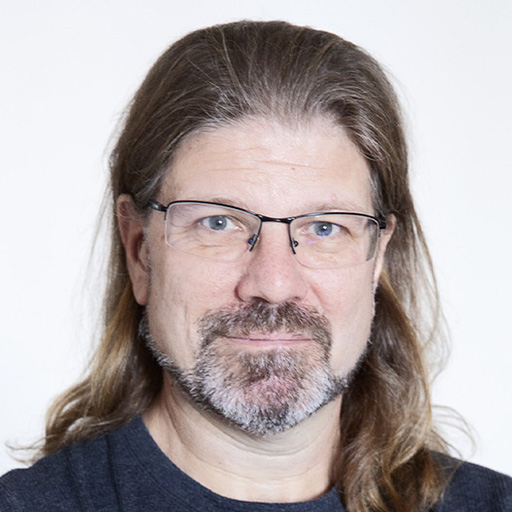
A game’s roadmap doesn’t end at launch. If anything, that’s when players, data, stability, technical debt, and the team’s real-world capacity begin to shape it.
Using the post launch development of ICARUS: Console Edition as an example, we’ll explore:


Lee Oscar is a freelance concept artist with experience in films and games. He’s also passionate about the industry and enjoys making new connections.
He co-founded the Afterprod monthly events and the Chromaa festival to showcase the artists working in pre production. His other activities include teaching at New3dge & Artside, and making pizzas.


Kristián is a QA Analyst at BAE Systems OneArc Czechia. He works on the team developing VBS Blue, their proprietary graphics engine that renders a 1:1 scale digital twin of Earth used by over 60 NATO and allied nations.
Because the team sits at the very root of the development pipeline, the engine’s stability directly dictates the success of every other feature team and the final training experience of their users.

Testing a 1:1 scale digital replica of the entire planet is a unique logistical challenge. Covering a surface area of 510 million square kilometers alongside endless combinations of biomes, lighting, and dozens of distinct atmospheric parameters makes traditional manual and automated testing nearly impossible.
This talk offers an honest look at how our QA team attempts to manage this chaos. I won't be presenting a "miracle solution." Instead, I will walk you through how we maintain stability through slow, steady improvements under a very tight release schedule. I will introduce our core engine, explain the tools and CI/CD autotest pipelines we use, and dive into the real-world struggles we face daily.